

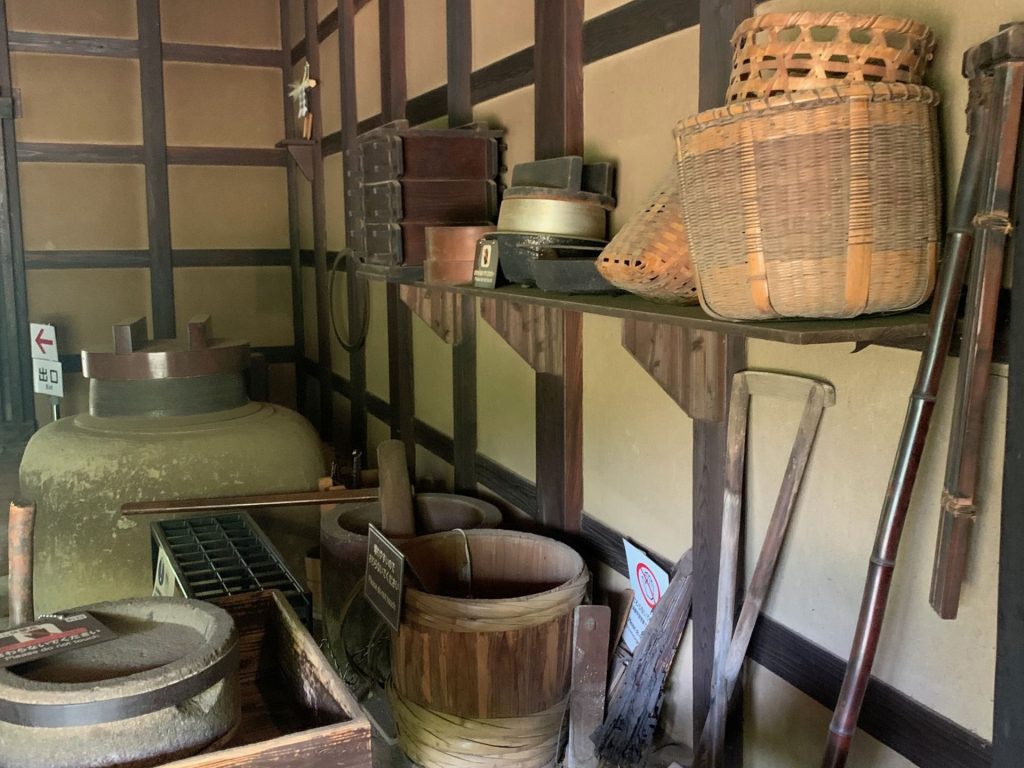
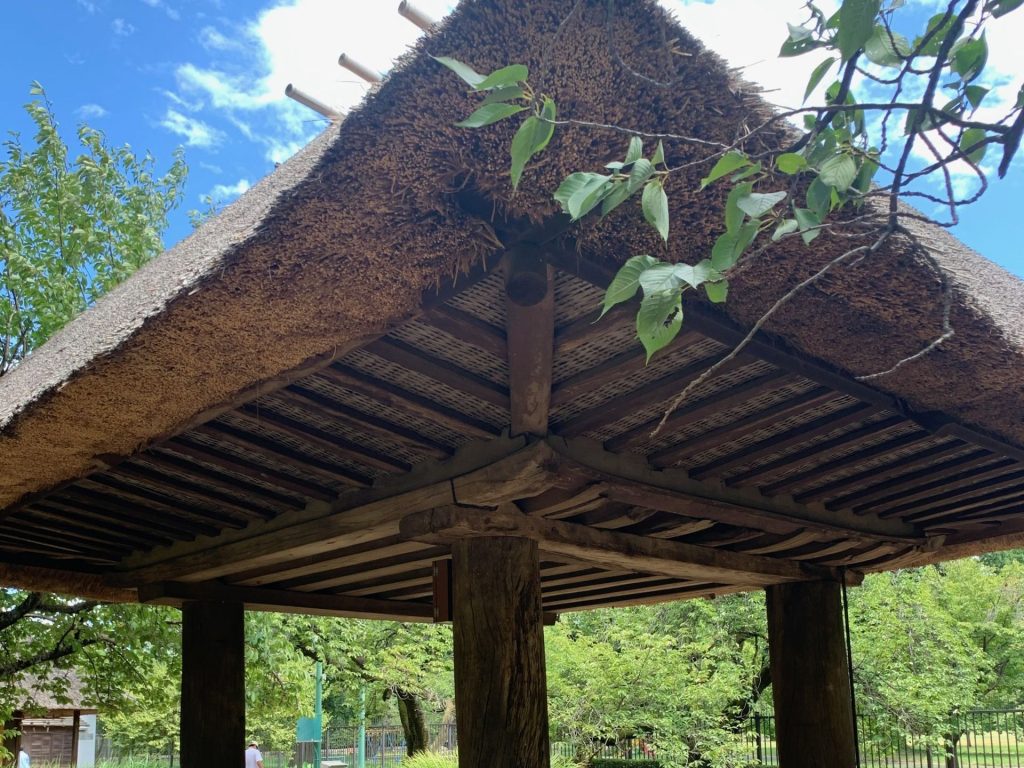
Some of the earliest examples of a live/make space can be seen in rural areas with modest farmhouses.
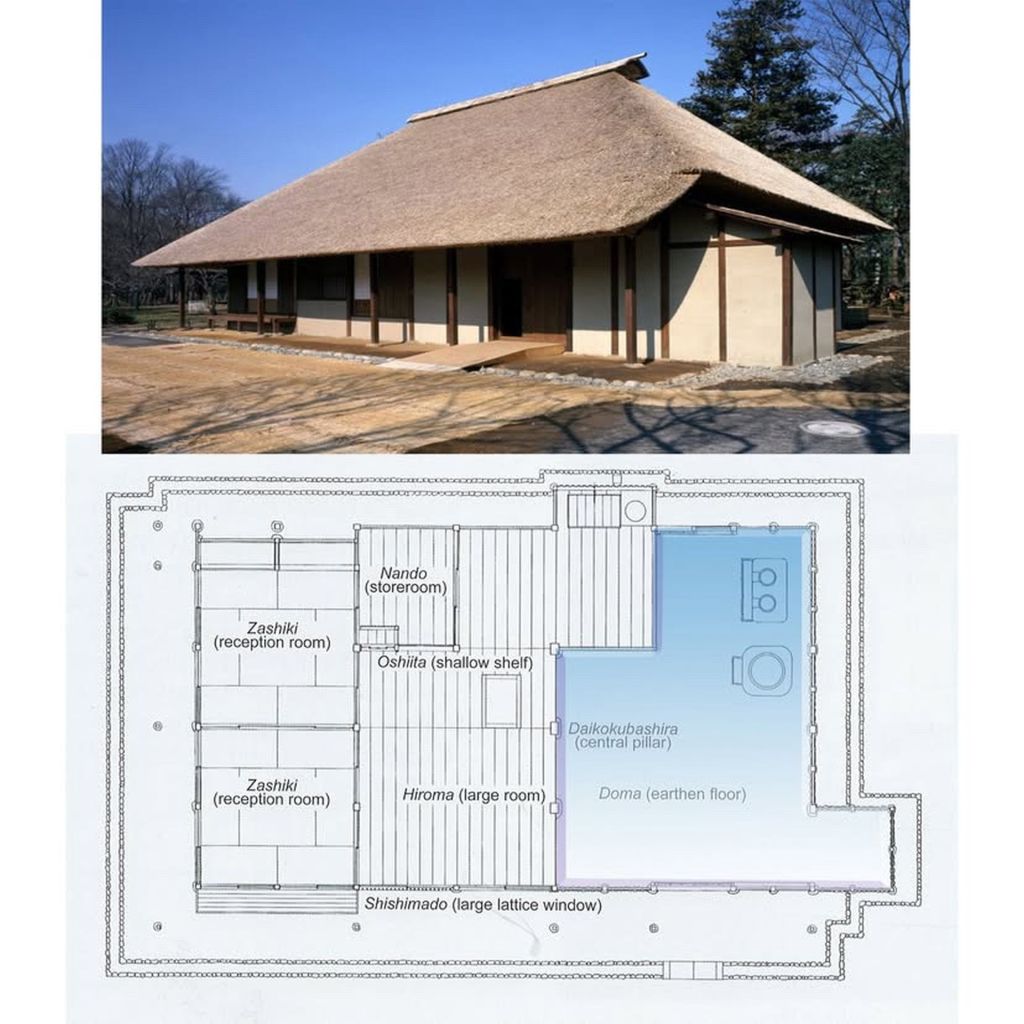
We visited the Edo Open-Air Tsunashima Family Farmhouse (reconstructed, approx 1600-1860), which demonstrates an immediate relationship of living and making.
The floor plan highlights a multi-purpose workspace incorporated within a single large roof structure, while living spaces are conveyed with wooden boards and tatami mat floors. Work spaces, the spaces for labour and household chores, are denoted with earthen floors. The work spaces are proportionally generous and show the significance given to the activities of making in daily life.
The earthen floor can be seen in later iterations as it mutates, evolves and is adopted for a variety of specialized activities in urban areas.
 live | make | transform