
wataban / orinasu-kan : part 1
press for video
Nishijin is the historical center of the textile industry in Kyoto. This storied weaving district is home to many machiya and weaver houses (a dwelling with a small weaving workshop).
This large weaver house (1936) was originally owned by the founder of Watabun (1906), a textile company specializing in kimono and obi silk.
Elements of a weaver house include :
1) an atrium
2) a skylight
3) an earthen passageway to connect front to rear
4) tatami mat reception rooms
5) a weaving factory in the rear courtyard.
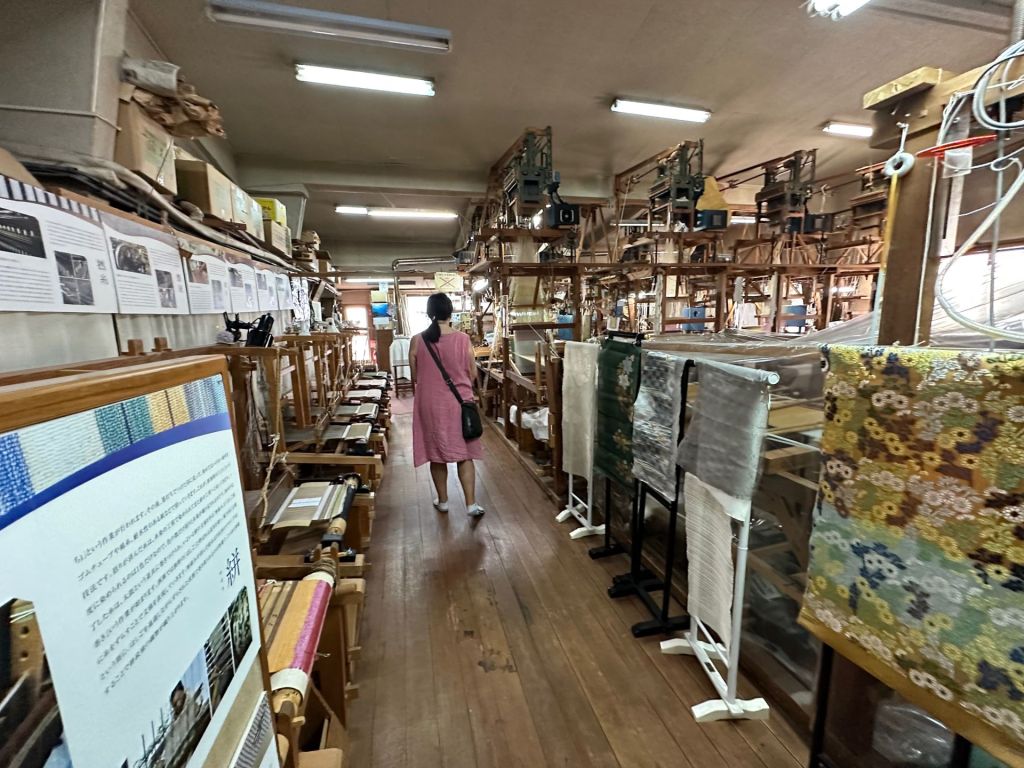
After it was renovated in 1989, the family dwelling was eliminated. Now, this historical machiya houses Watabun — a fabric showroom, store, and third floor weaver workshop — and Orinasu-kan, a museum of handmade fabric.
watabun / orinasu-kan : part 2
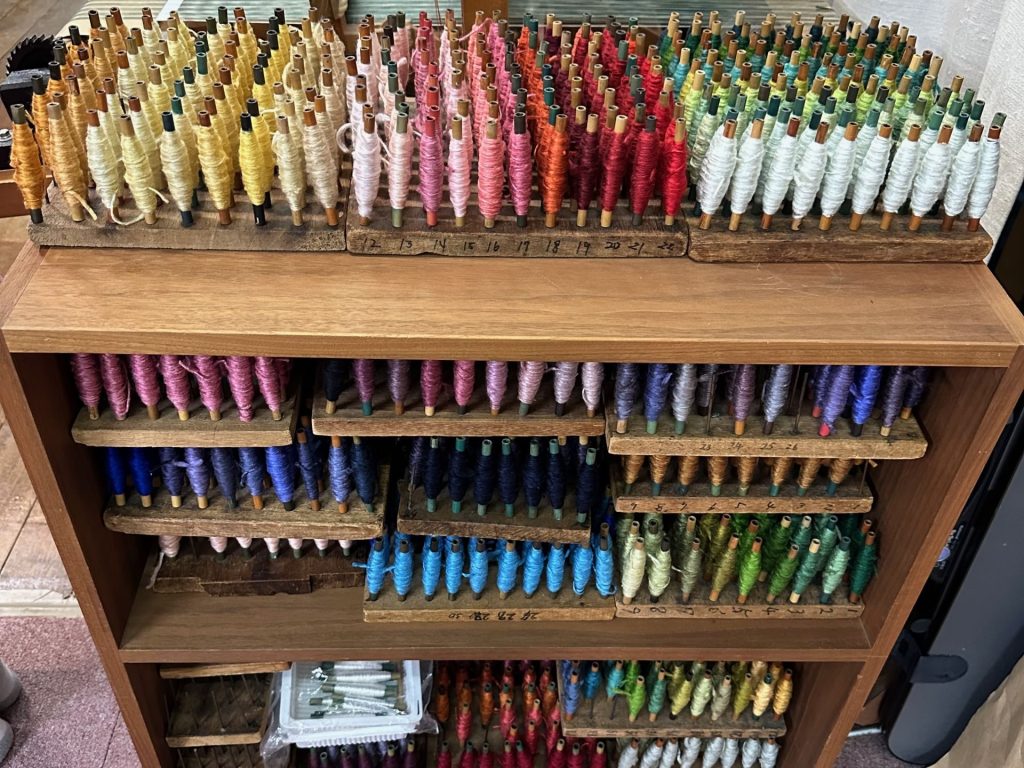
The growth of Nishijin-ori or Nishijin silk brocade was concurrent with the development of Kyoto’s Imperial Court Culture and its expansive reserves of wealth. Within a five km radius of Nishijin was an established weaver community — an ecosystem of weavers, designers, pattern makers, yarn dyers, thread makers and textile stores.
You could once hear the sounds of many looms clacking throughout the neighbourhood, but the number of independent weaving companies has dwindled. There are many challenges for this labour-intensive craft and its makers :
1) There is a change in lifestyle and a decline in demand for kimonos.
2) The current artisans are getting older and they need more apprentices to pass on the traditional weaving techniques.
We spoke with a weaver with seventeen years of experience. Upon asking how long it took to reach proficiency with various weaving techniques on manually-powered looms, she replied … twelve years.
 live | make | transform