

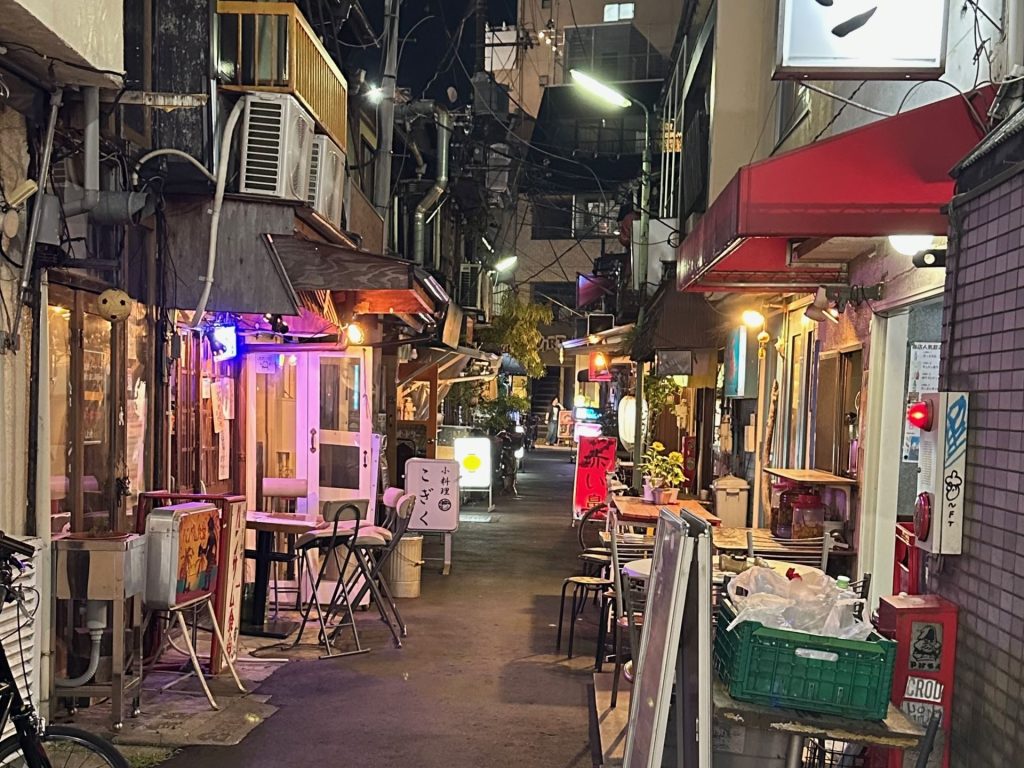
Yokocho, “yoko” meaning “side” and “cho” meaning “street, block or town,” are tiny streets and back alleys filled with micro-bars and small restaurants. Usually forming entertainment districts around major transit hubs, yokochos are also remnants of the black markets that sprang up after the Great Kanto Earthquake, and post-WWII. For many years yokocho had a reputation for housing illegal gambling and prostitution, but they are now considered a place of urban renewal.
Japan’s government needed to focus on large infrastructure projects during the post-WWII years, and so it was the small business owners that stepped up to fill the gaps in local economies.
The yokocho is stronger than a single restaurant, and collectively forms a distinct district. Attempts to formalize the black market lots in the reconstruction years resulted in the yokocho having many individual owners and many small micro-lots. Forming an owners’ association allows these small business owners to advocate for their community and deal from a position of relative strength, especially when facing increasing pressure from the land developers.
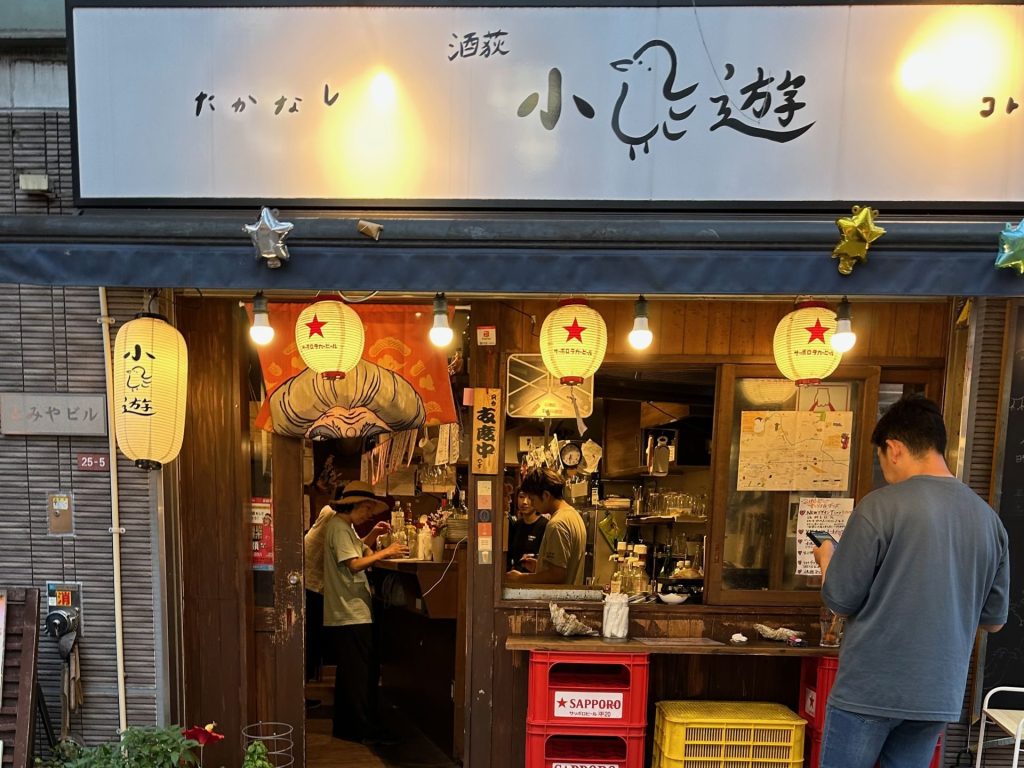
The individual micro-bar or restaurant is staffed by a single person, often the owner, and can serve between 5-10 customers. The small scale of these operations offers opportunities for a new generation of entrepreneurs. The tiny footprint and shared facilities/toilets often mean lower startup costs, less equipment and less rental fees.
This is Yanagi Koji (Willow Alley) and the surrounding streets near Nishi-Ogikubo train station. It is a local yokocho, not a tourist hotspot. This compact, tightly knit community is lively, bustling and intimate. It is filled with spontaneous interactions of meeting and greeting, as the festivities of eating and drinking spill out onto the narrow lanes.
 live | make | transform