
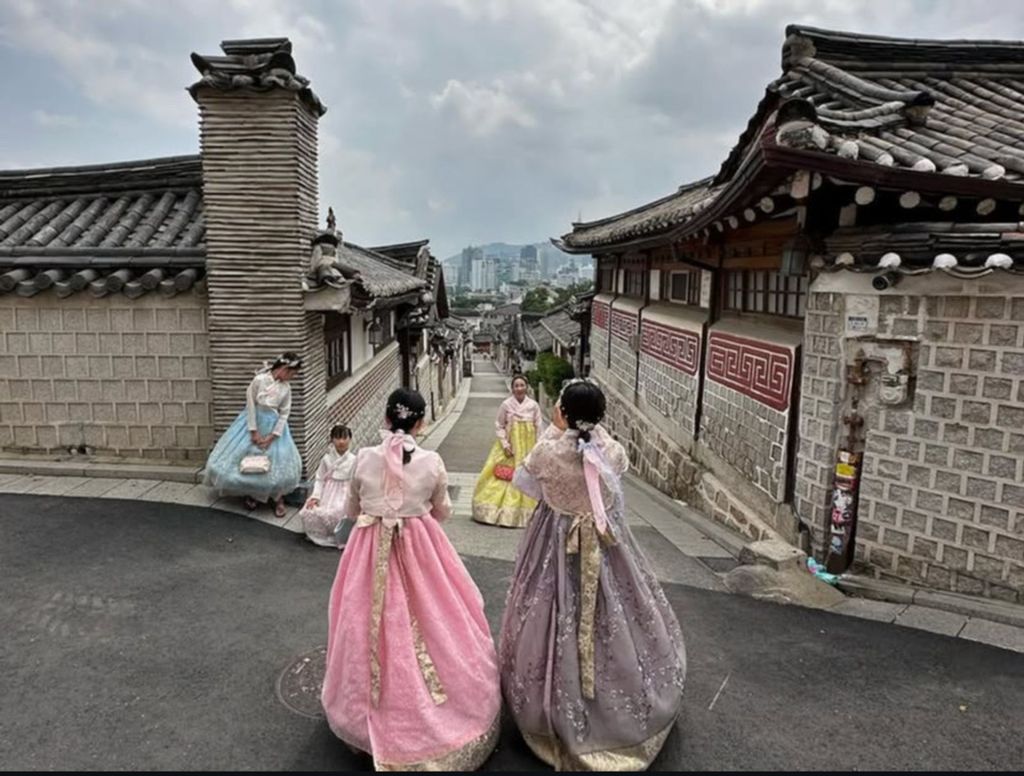

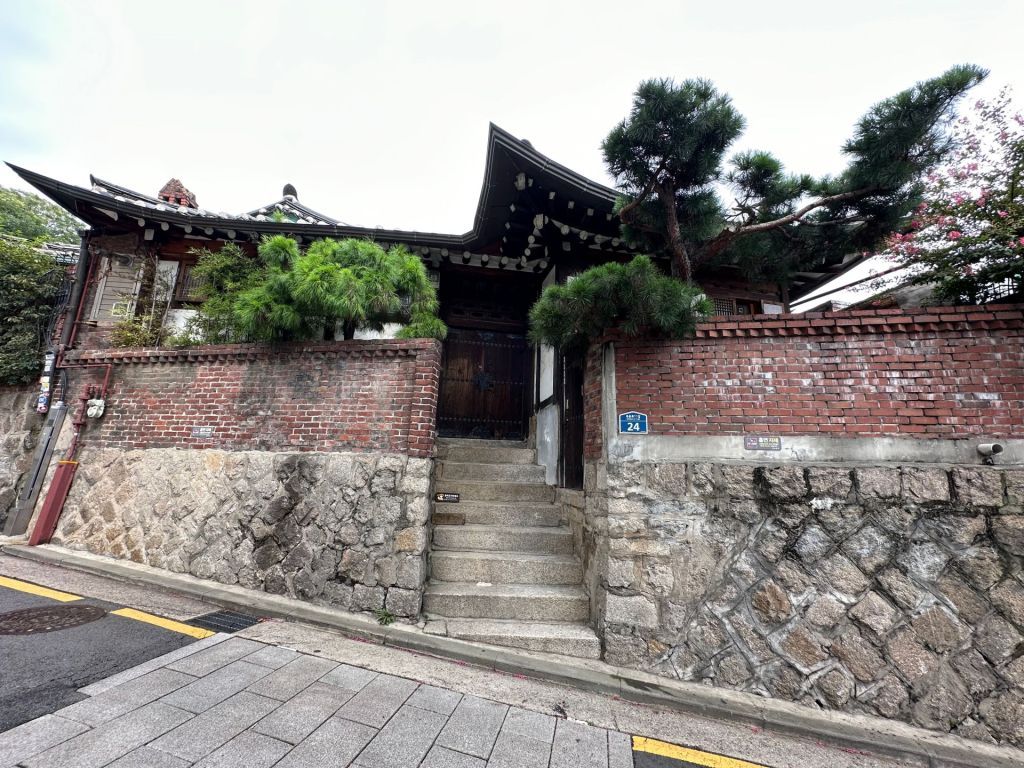
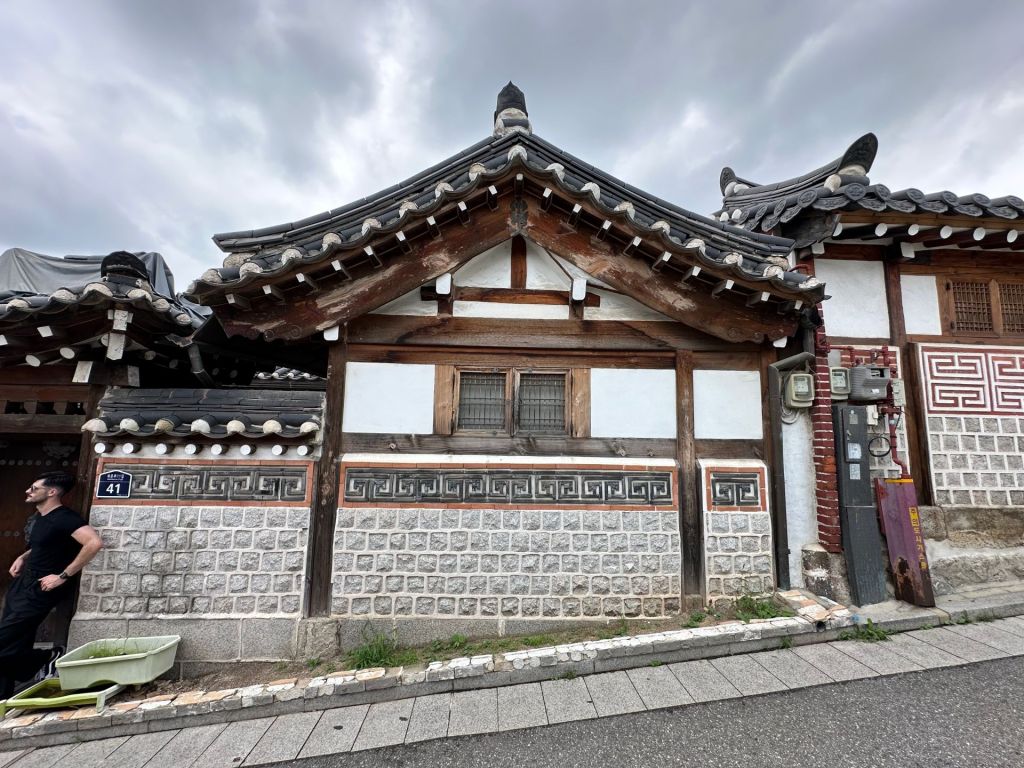
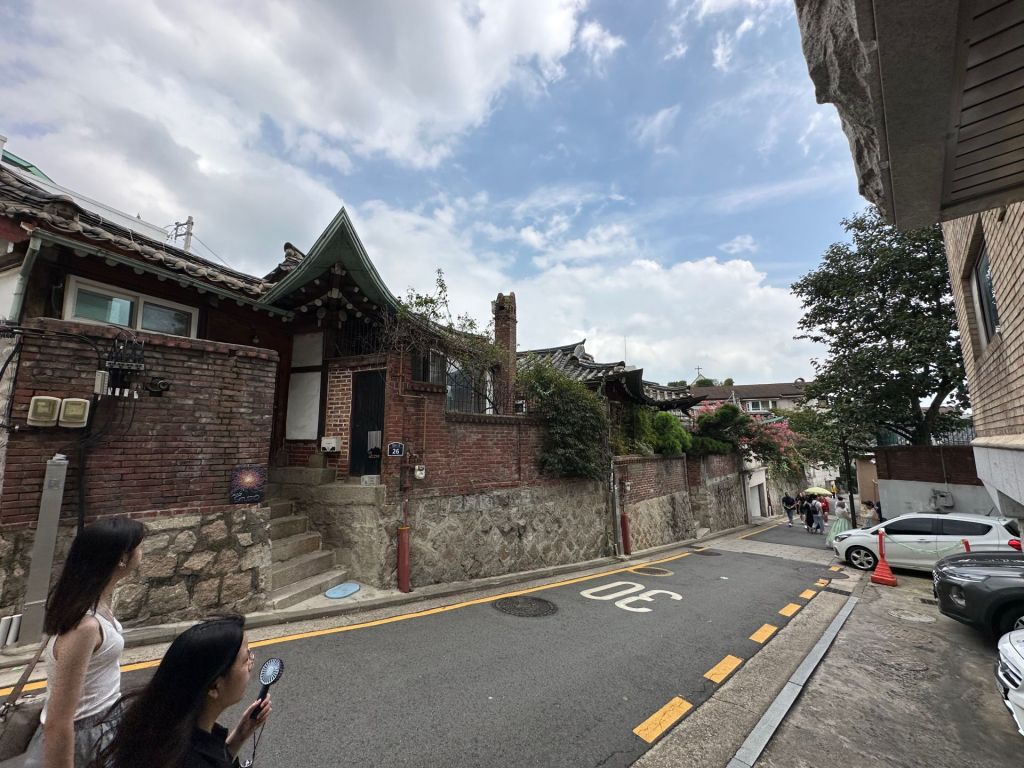
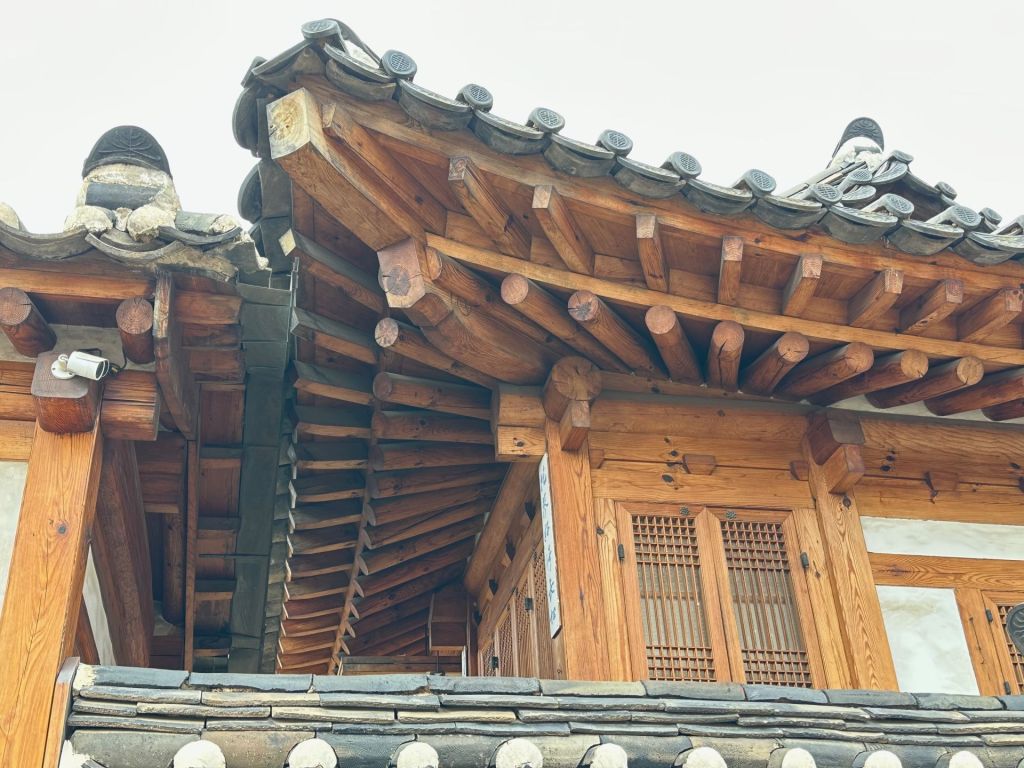
A hanok is a traditional Korean house, often with wood frame construction. At one time, hanok villages made up the fabric of Korea’s towns and eventual cities. Like the machiya in Japan, hanok usage could be purely residential, but they could also be multi-purpose. This might feature both dwelling spaces and work/make spaces ( workshops, offices and retail), as well as a courtyard in between.
Post-1960s, after suffering through multiple wars, Seoul was a city in ruins. The hanoks were approximately 50 – 100 years old, deteriorating, and negatively perceived as clinging to the old ways. These wooden town houses, narrow alleyways and tight knit communities were often demolished and replaced with large-scale developments and multi-unit high rise apartments.
In the late 1990s there was an understanding that much of Seoul’s cultural heritage was being lost. The Seoul Metropolitan Government implemented a policy to try and preserve what little clusters of hanoks were left.
Bukchon Hanok Village is located in Seoul’s Old City. With close to 900 hanoks, this primarily residential neighborhood is also very much a mixed-use neighborhood. There are well-preserved, reconstructed hanoks used as single-family housing interspersed with hanoks that serve as museums and workshops. These feature traditional Korean handicrafts such as textiles, mother-of-pearl inlay, and woodworking. Far from an exclusively preservation district, many other Bukchon hanoks present opportunities for a diverse array of creative and maker activities — workshops and maker spaces, art galleries, offices, guest houses, cafes and restaurants.
 live | make | transform