
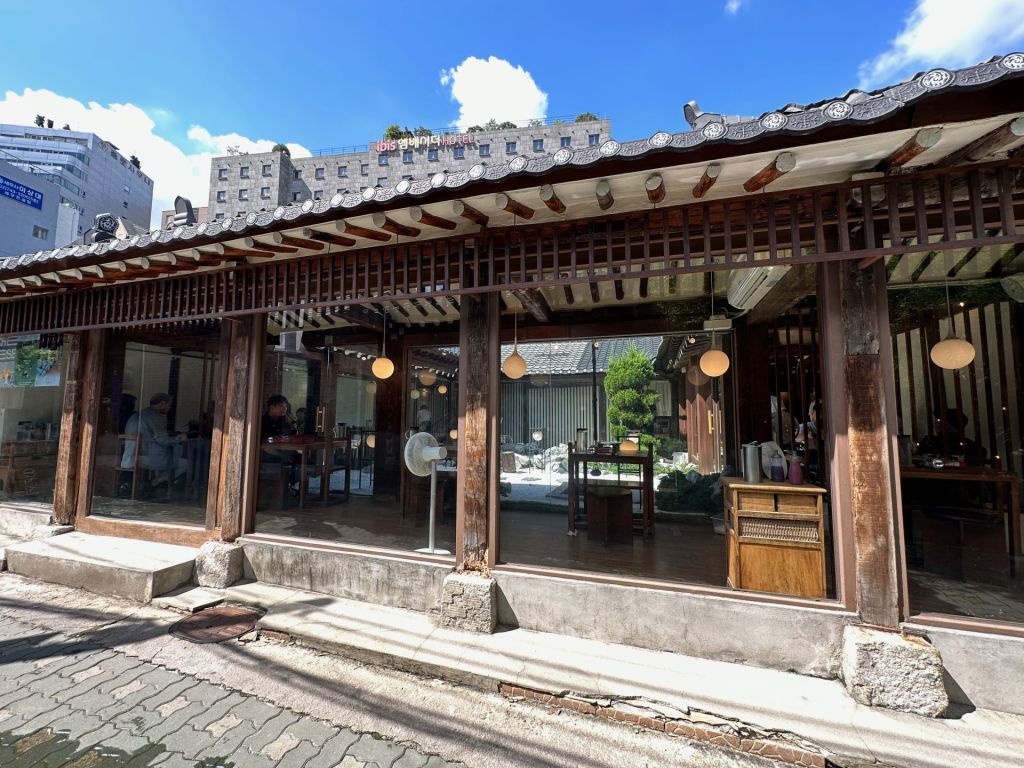
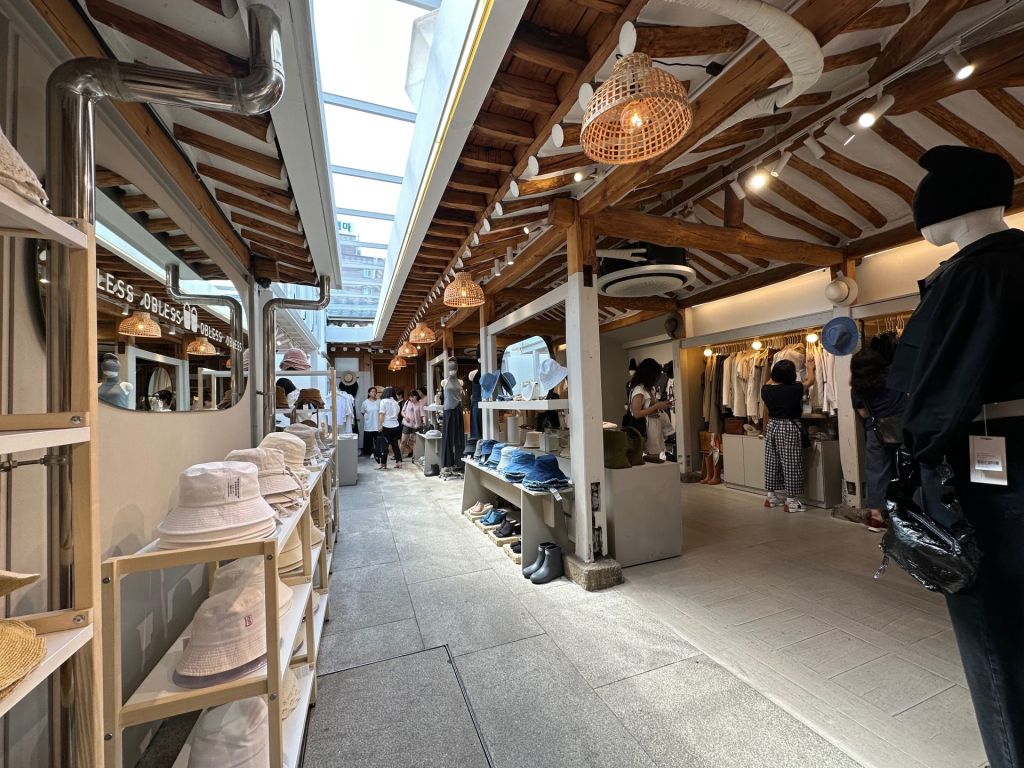
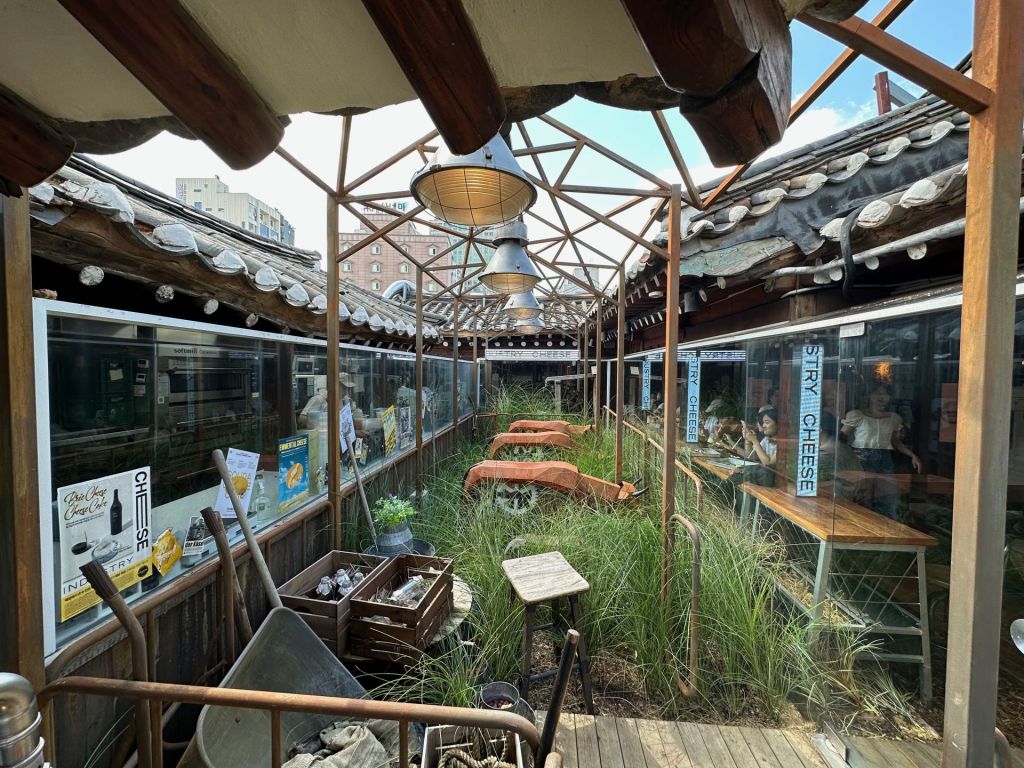
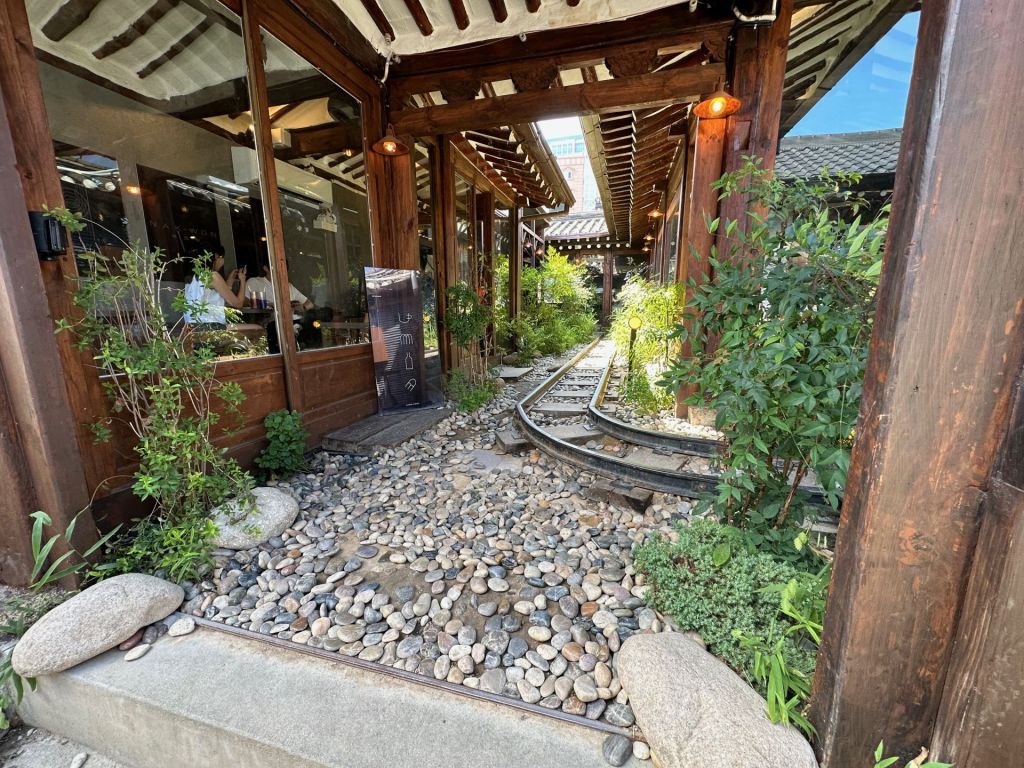
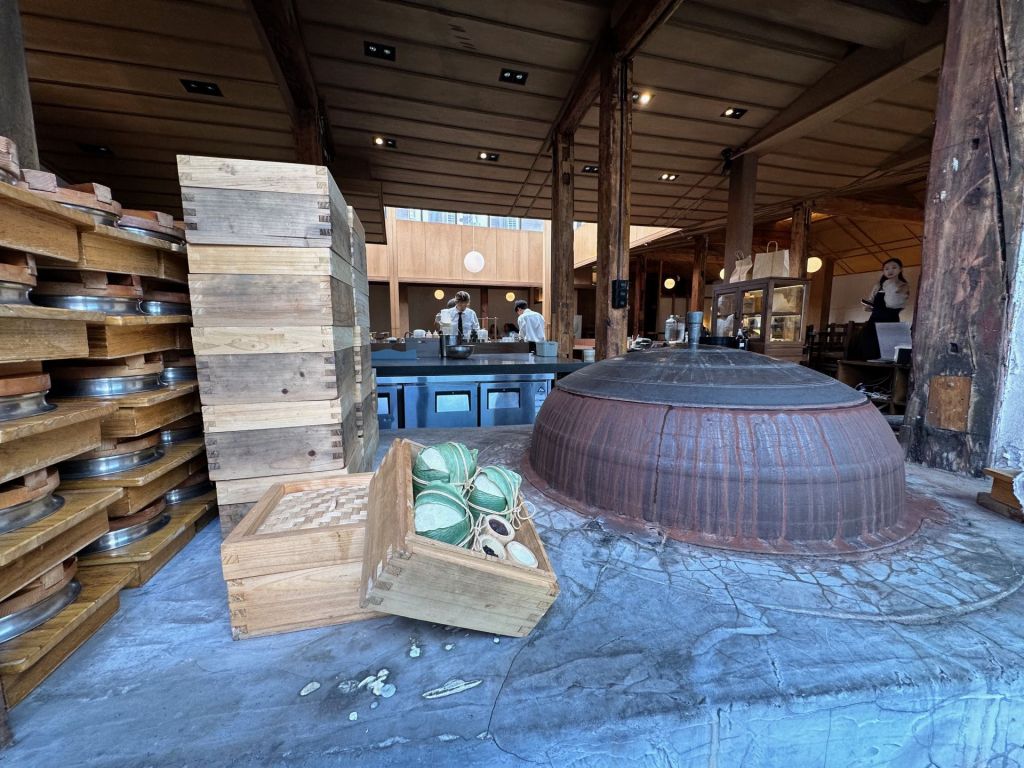
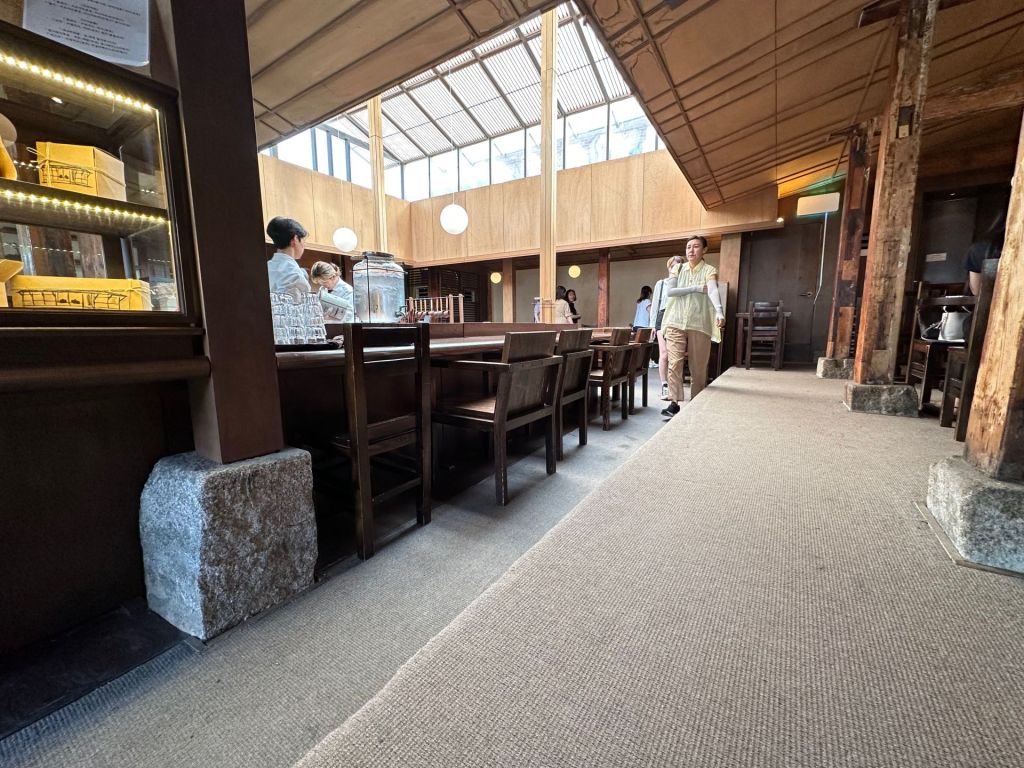
While Bukchon Hanok Village was originally a residential enclave for high-ranking officials north of the palace, Ikseon-dong Hanok Village is rooted in the hanoks of the working class. Surrounded by larger residential and commercial buildings, Ikseon-dong is located in Seoul’s Old City. With approximately 100 hanoks set amidst a maze of narrow, grid-laid alleyways, Ikseon-dong’s hanoks are older — with courtyard houses on smaller individual sites.
South Korea prides itself in its cultural heritage and its progressive contemporary design. This mix of old and new come together in the buildings and tight alleys of Ikseon-dong. The conservation of the hanok district has been supported by the Seoul Metropolitan Government, but the energy and drive comes from the individual citizens.
Ikseon-dong is a wonderful example of adaptive re-use. The re-constructed hanoks are not conserved or constrained and their usage, interiors, and construction standards are varied. The hanoks form the framework of the streets, and the openings in the hanok roofs form courtyards, new skylights and light wells.
The hanoks‘ small scale is important as well. For many makers, a small square footage often means smaller rents, smaller start up and maintenance costs, and an opportunity to experiment and eventually build a successful venture.
If we consider all spaces related to food and beverage as maker spaces, then the workspaces and environments of bakeries, cafes and restaurants contribute greatly to a vibrant maker district. Ikseon-dong — with its niche artisans — features cheese makers, breweries, restaurants with specialty dumplings, and tea houses with Korean desserts.
 live | make | transform