
makerhoods : part 1

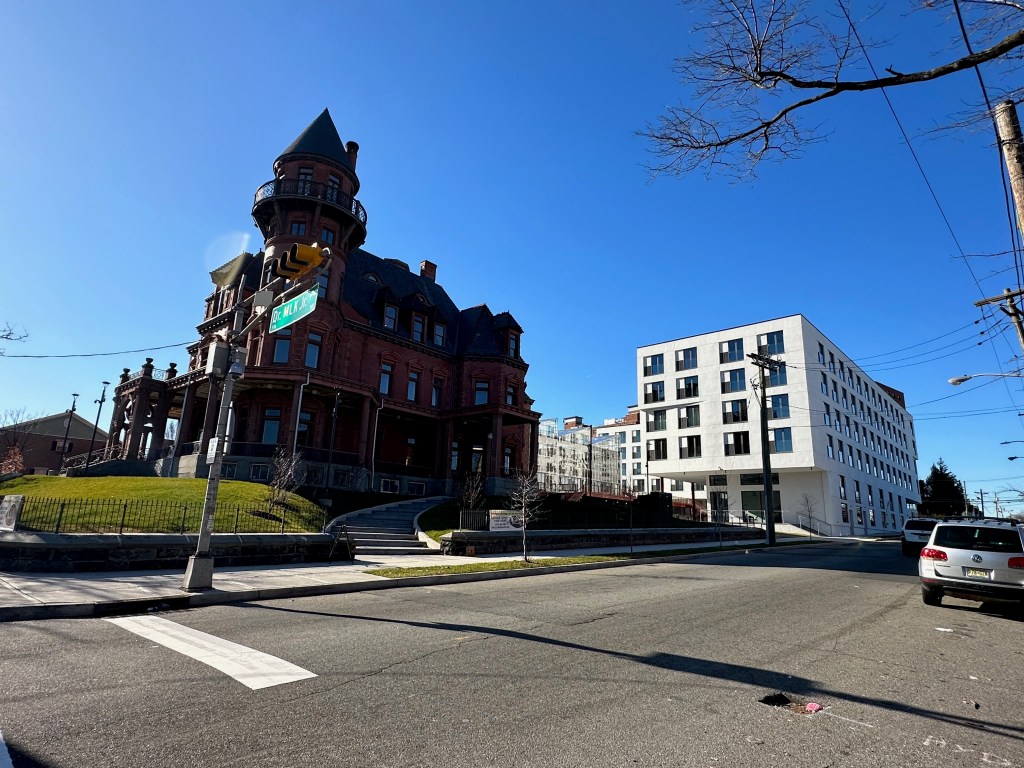
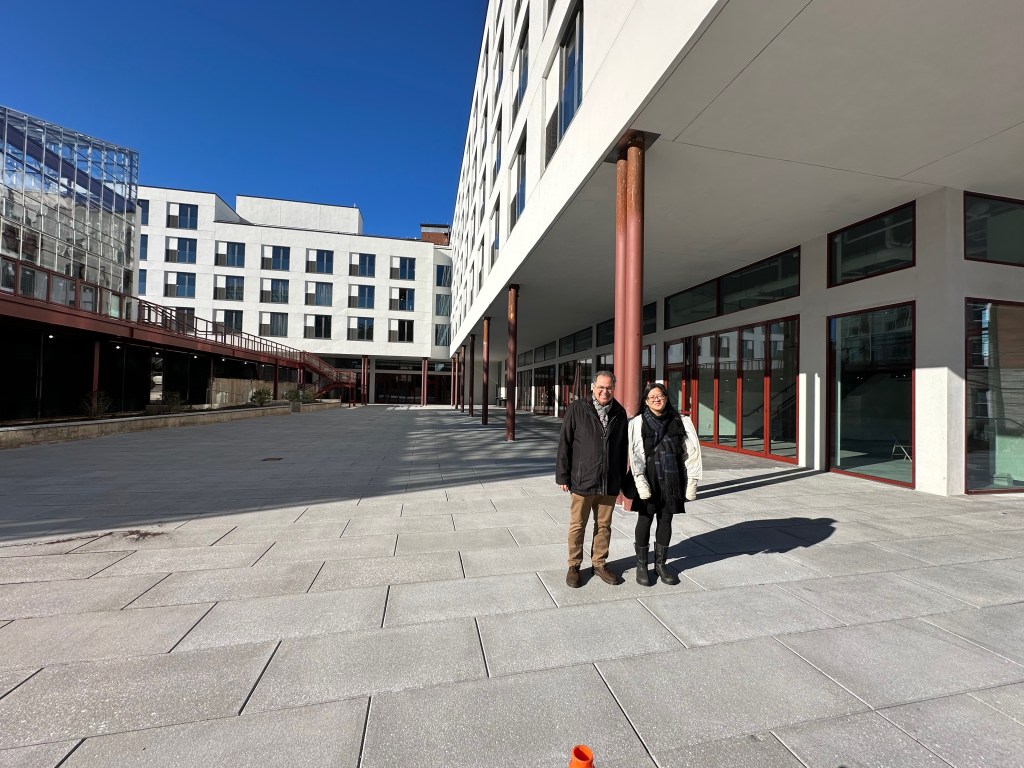
“We need to rethink who the city is for … We must rebuild with the least fortunate in mind, not by forcing affordability alone … but by re-designing cities to offer opportunities for self-employment through affordable living and affordable commercial space” — Avi Telyas
We first heard of Makerhoods through a Tedx talk by Avi Telyas, its founder and CEO. We were interested in its premise, followed its construction, and eventually were fortunate to meet Avi and tour the almost-completed site.
Makerhoods’ stated goal is to make it easier for first-time entrepreneurs to start and operate a business, climb the economic ladder, and build a future. This community-based development consists of : 66 mixed income apartments (affordable and market-rate), 16 maker spaces, a greenhouse, a demonstration and commercial kitchen, a co-working space, an event space and a courtyard.
In North America, Newark Makerhoods is a rare, built project that combines living and making under one roof. The entrepreneur pays one rent (2/3 market rate) for a living unit, a shop/workshop, and access to business training and support.
Avi speaks of the long road promoting a strategy of Economic Oriented Development, the challenges and barriers put up by entrenched North American zoning by-laws — which separate live and work/make — and the difficulty of raising funding for an innovative yet unproven concept. He also speaks with pride of the hard work put in with the City of Newark and other branches of government to literally rewrite the zoning by-laws for this project.
Makerhoods zoning requires:
1) The shop/workshop to be small, less than 1000 sq ft – so rent can be affordable.
2) The entrepreneur to live onsite. This supports local makers and prevents those not fully invested in the neighbourhood from from renting workshop space.
3) A 20% cluster of similar maker spaces — enough to form a community.
makerhoods : part 2

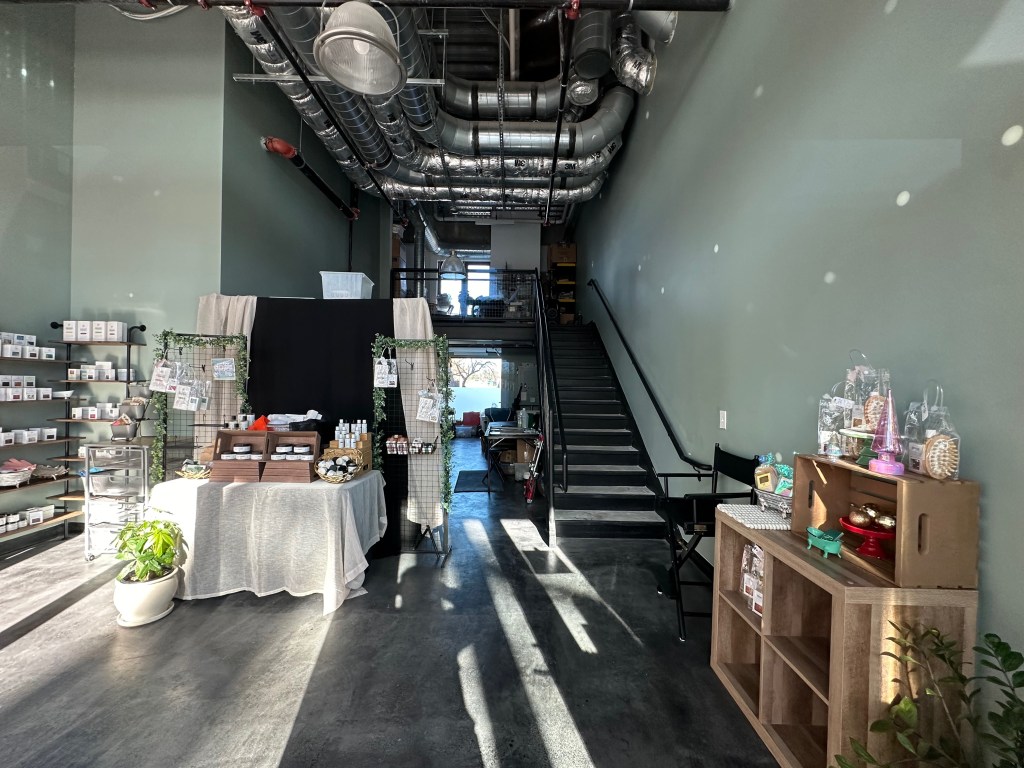
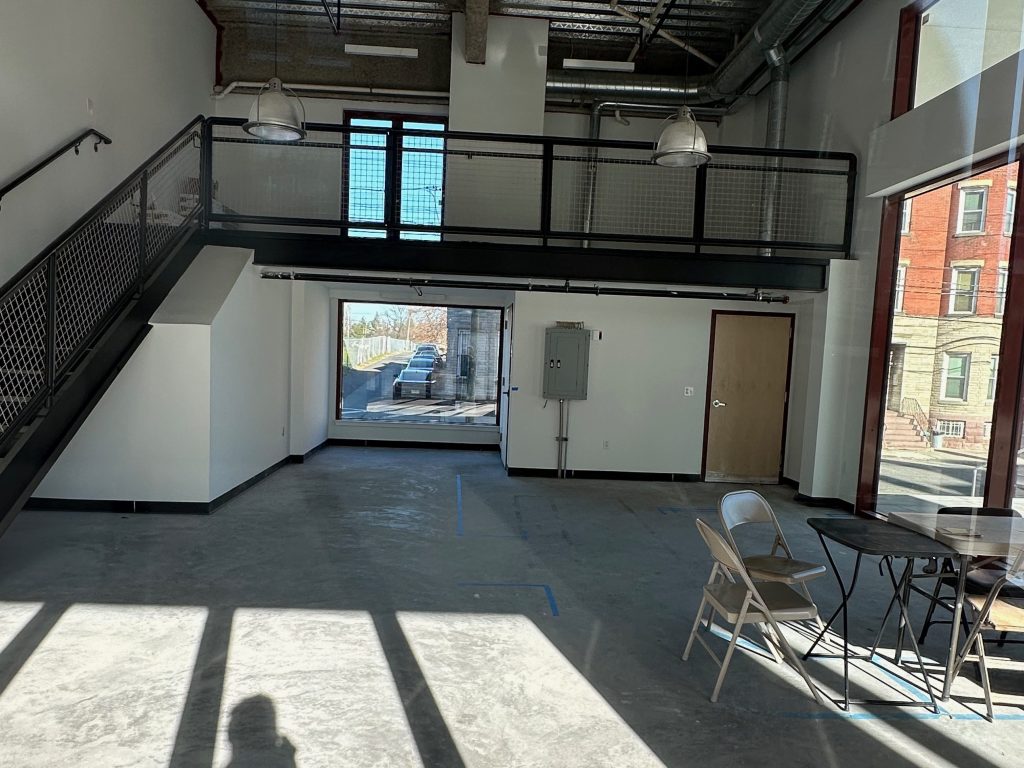
Micro-businesses, businesses with less than five employees, make up over 90% of employer businesses in both Canada and the US. The way we live our lives, use our homes and envision our workplaces is changing. With an eye to these changes, we can design and experiment with new and inclusive opportunities for a diverse mix of people.
Scale is important. We recently came back from Japan and saw how much you can do with a tiny footprint … sometimes less than 500 sq ft. For North America, 1000 sq ft or less seems appropriate for a small-scale maker. A smaller area means rent might be more affordable — helpful if you are moving from a basement, garage or shared workspace. However, North American developers do not often build to this smaller square footage, as established businesses and big chains tend to be less interested in this size.
In Makerhoods, the living spaces are paired with various light or lean manufacturing. This could mean food and beverage, textiles, fine arts, etc. Heavy industry with noise and dust is excluded.
The maker spaces are designed as a two-storey loft with a mezzanine. There is a work sink, a bathroom, a big display window to the street and a set of large bi-fold doors that open up to the courtyard. These small maker shops can accommodate a workshop space, a retail shop, an office and storage area.
The green house, commercial kitchen and communal courtyard are also important elements, as the programming and events aim to help a group of individuals builder a larger sense of community, especially in underserved neighborhoods.
When we visited, several of the maker spaces were closed, or not yet rented. New makers are starting to set up and inhabit the workshops. We would like to return at a later date to visit these maker shops, meet the entrepreneurs and small scale makers, and hear about their experiences and journeys.
makerhoods : part 3

Makerhoods is now built. It reflects the ‘live above the store’ shophouse typology, but adapted and constructed for contemporary times.
It will take a while to assess Makerhoods’ growing pains, successes and failures : Will the siting and location — away from a Main Shopping Street —work? Is the 2/3 market rate affordable? Is the market rate already astronomical? Can the courtyard and programming aid larger community formation or encourage neighborhood support?
Makerhoods’ socially driven development is a potential model for other communities. It aims to be inclusive and give opportunities to small-scale makers, those who have a strong drive and entrepreneurial spirit but who may be underrepresented.
In many parts of the world, there has been an increase in policies attempting to create affordable housing for mixed-income developments. Governments are also building and setting policies requiring developments to include a certain percentage of affordable commercial or light manufacturing spaces; they are recognizing that affordable commercial spaces are valuable and necessary for a healthy city.
We asked Avi what it would take to get other developers on board and he responded : you have to believe you can build with a social conscience, while still covering costs and profit — these are not always mutually exclusive.
 live | make | transform