

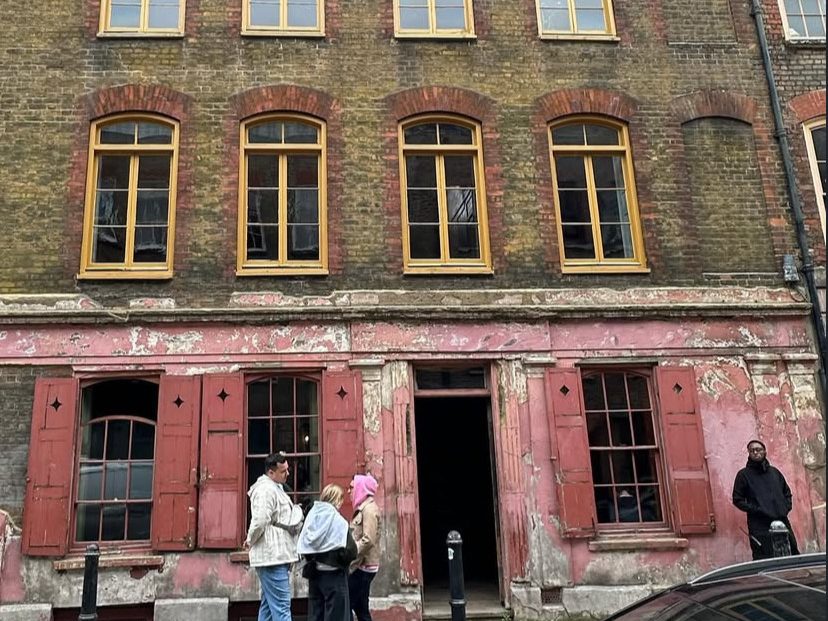
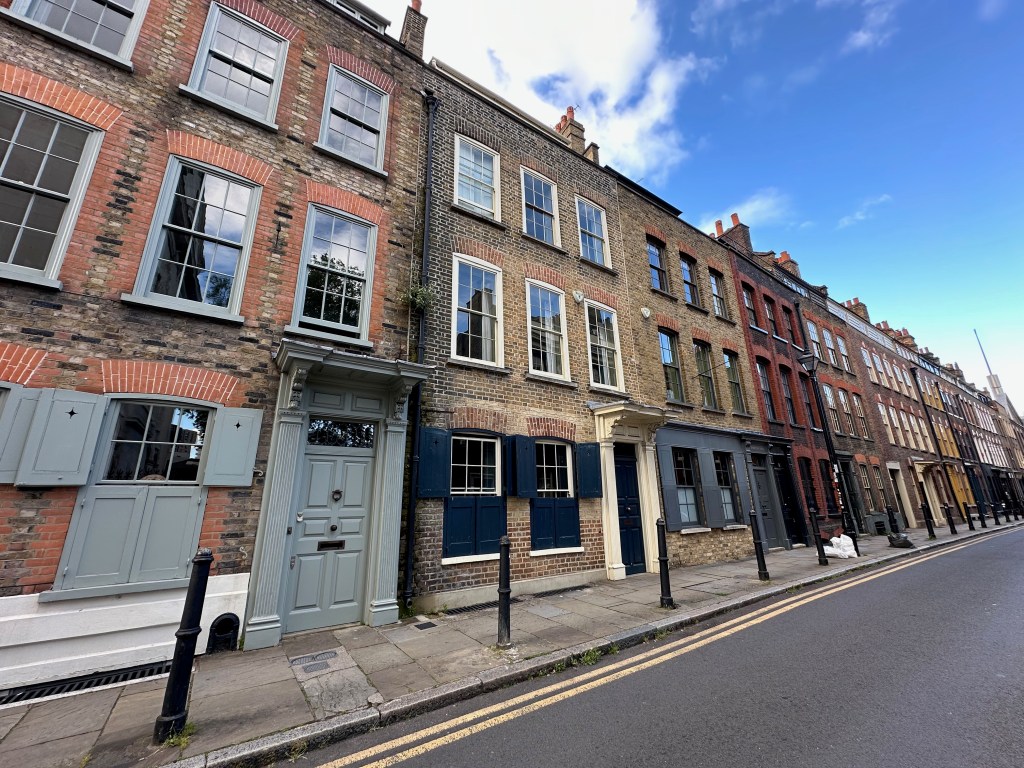
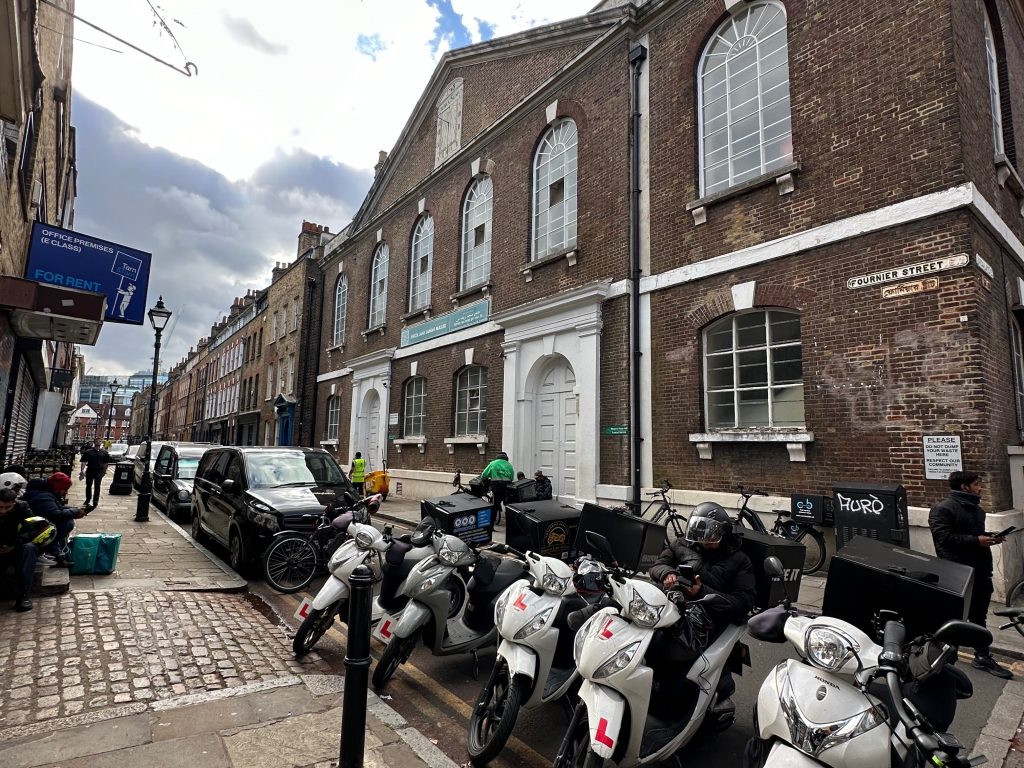
Between Spitalfields and Brick Lane lie a series of blocks of 18th-century weaver houses. These live/make dwellings were originally owned by the Huguenots (Protestants fleeing religious persecution in France). Thousands brought their silk-weaving skills and trade, settled in East London, and formed weaver communities.
On Fournier Street you can easily see the defining live/make attic typology for a weaver house and neighbourhood.
In a weaver house, the ground floor was a commercial showroom space wherein a prosperous silk merchant might ply their wares. The second and third floors were residential, and the attics were purpose-built workspaces to house the looms. The addition of plentiful natural light aided weaving.
These weaver houses and neighbourhoods have seen great wealth and great poverty, with successive waves of immigration over three centuries. The decline of the silk-weaving industry gave way to Jewish tailors and Irish immigrants.
In the 19th century, Spitalfields was notorious for poverty and a high crime rate. These once grand weaver houses became dilapidated, and were split up again and again into multi-occupancy units.
Currently, Brick Lane is home to a vibrant Bangladeshi community with curry houses and textiles. Fournier Street is once again a much-desired address.
 live | make | transform