
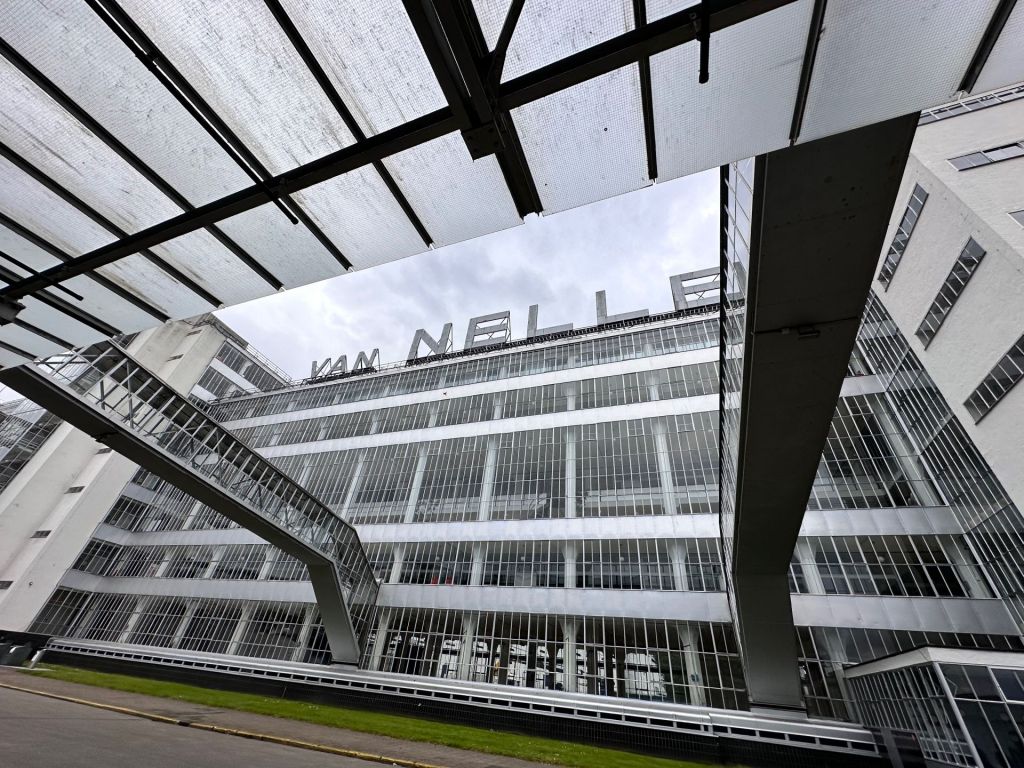
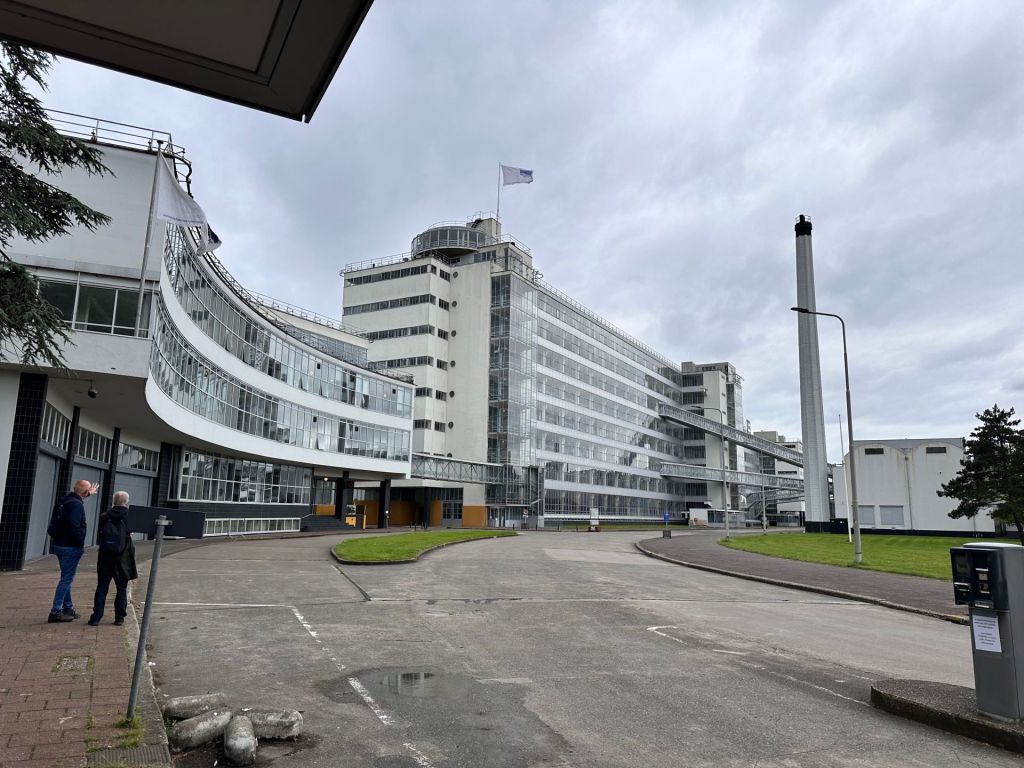
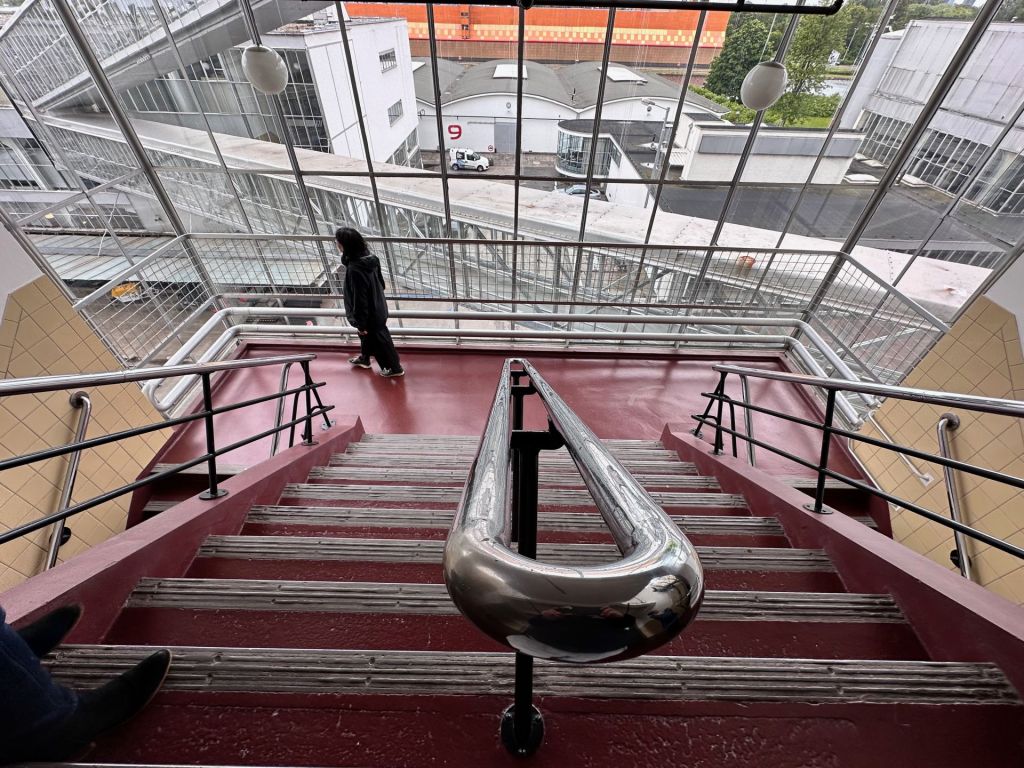
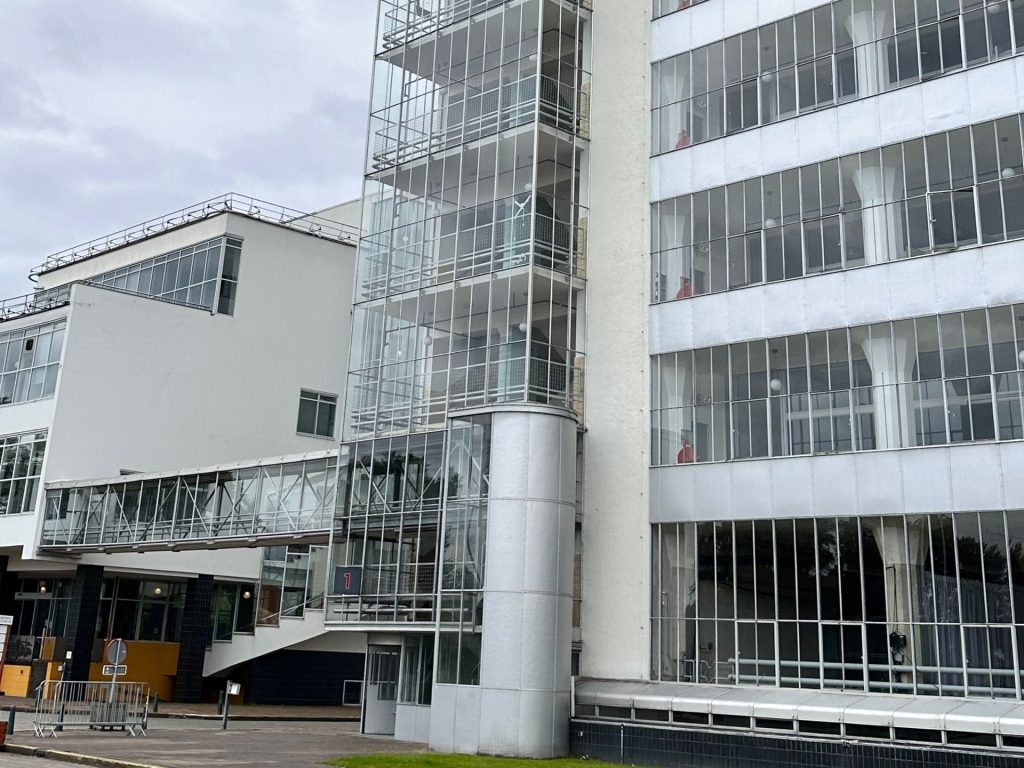
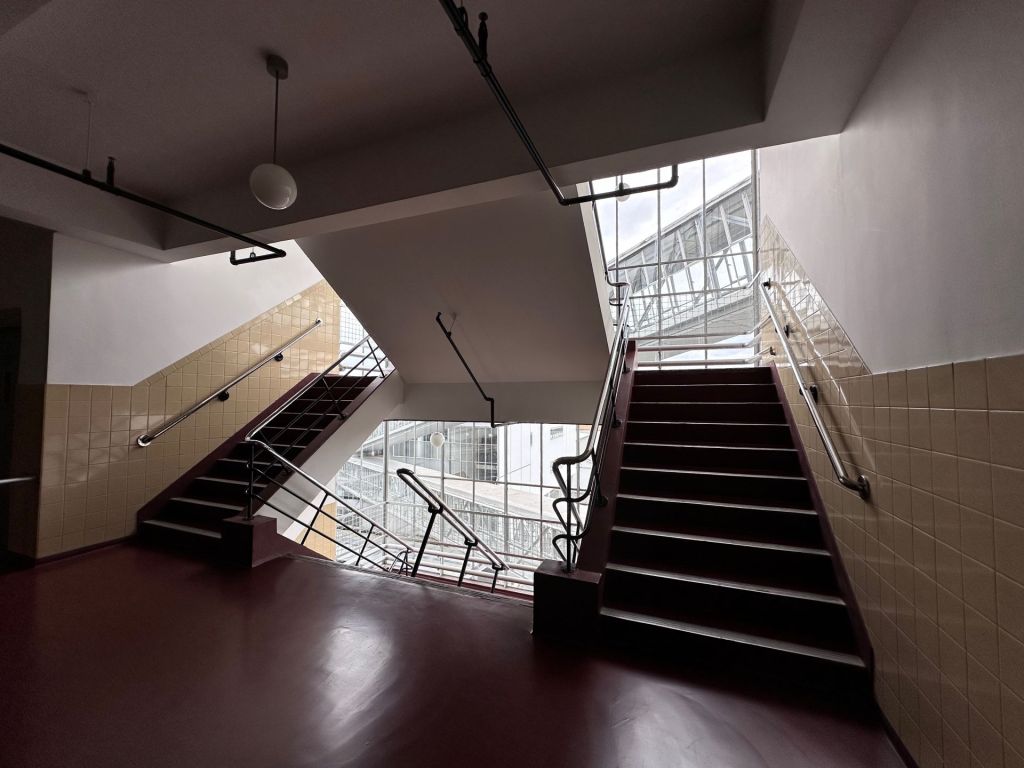
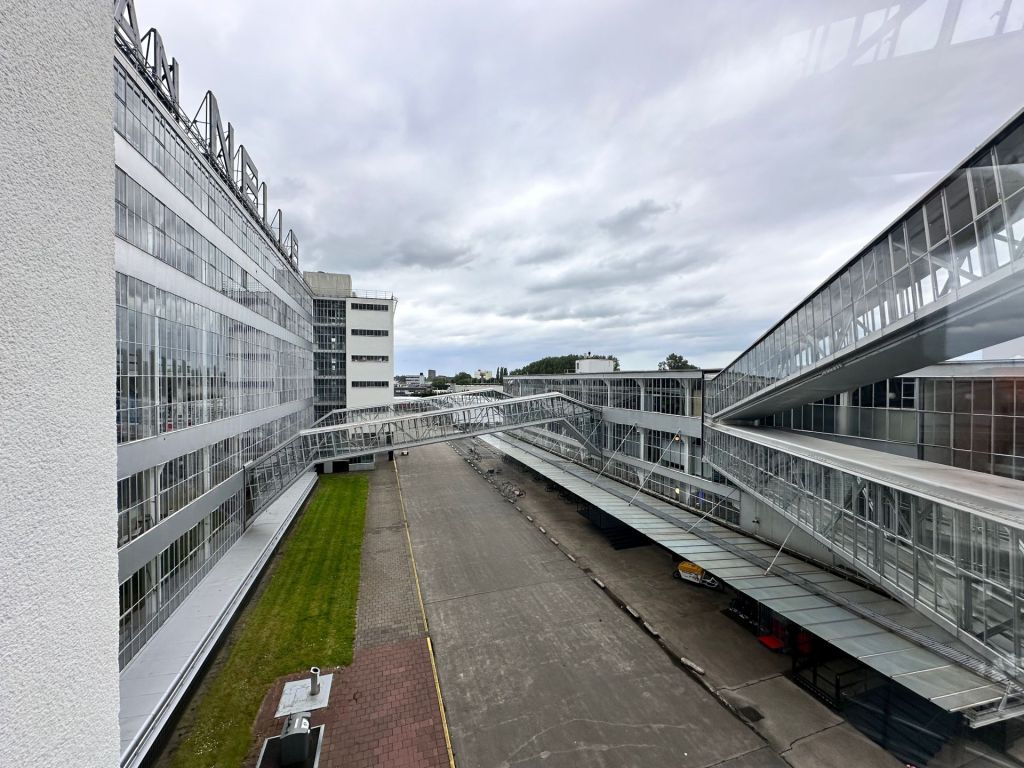
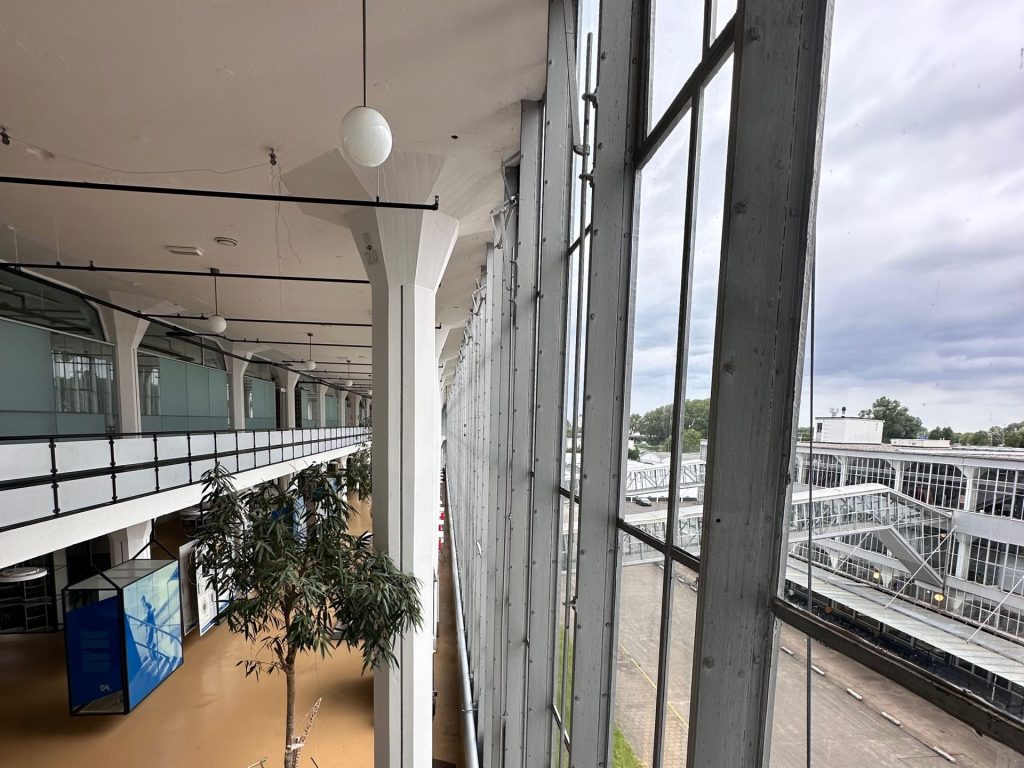
The Van Nellefabriek is considered an icon of 20th century industrial architecture. The Van Nelle Factory (1931) embodies the spirit of the interwar period in Europe, reflecting a sense of progress and optimism with new technology, materials, and pathways of exploration.
Located in Rotterdam, home of one of the busiest ports in Europe, the Van Nellefabriek is situated close to many modes of transportation — canals, railways and roads. The factory complex initially processed coffee, tea and tobacco, and is a window into the history of the Netherlands’ importing, processing and distribution industries.
The Van Nellefabriek is viewed as hugely influential to the development of modern architecture in Europe. The materials and architectural language are far removed from that of the Industrial Revolution. Built with reinforced concrete — not brick, a grid of concrete columns — not load-bearing walls, and perhaps the first large-scale pre-fabricated curtain wall, the Van Nellefabriek stood out as a beacon of modernity. It was given UNESCO World Heritage status in 2014.
However, the Van Nellefabriek is also rooted in exploitation. It is a structure of its time, and much of the wealth from the coffee, tea and tobacco came from colonial plantations. These plantations were only able to grow and prosper due to the centuries-long practice of using indentured workers and slaves.
The Van Nellefabriek was considered the “ideal factory.” All that open span, glass and steel led to a flexible layout, flooded with daylight. However, this level of open plan and transparency was desired, as it was easier to keep a constant and all-observing eye on worker productivity.
All production facilities closed in 1996, and this factory complex was carefully and meticulously restored in the early 2000s. The Van Nellefabriek, once home to the messy processes of manufacturing and making, is now a design hub with offices for creative IT companies and startups, as well as and co-working and event spaces.
 live | make | transform