

Tokyo was devastated post-WWII, and the government, private developers, and planning and transportation departments were unable to fund such an extensive urban reconstruction. Displaced residents, squatters and small-scale entrepreneurs banded together for survival, carving out places for their homes and livelihoods.
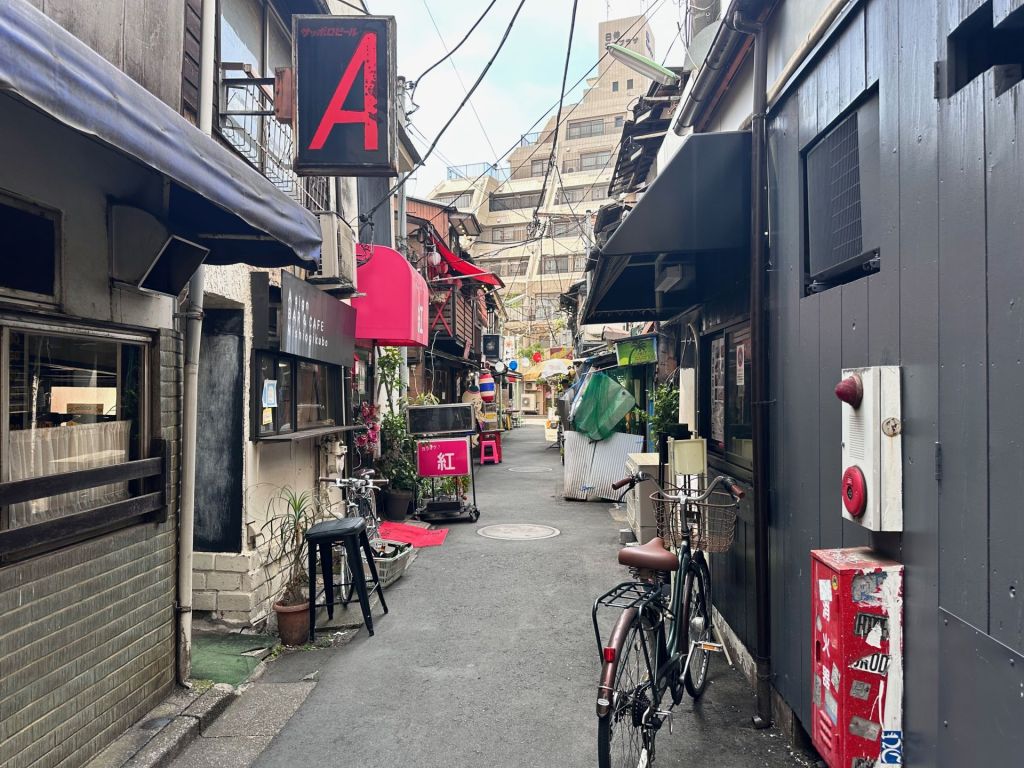
Yanagi Koji (Willow Alley) in Nishi-Ogikubo, Tokyo is one such organically-formed neighborhood. Lined with small two-storey live/make buildings, Yanagi Koji’s origins mark it one of many “unofficial” parts of the city. From a checkered past with the black market to a seedy entertainment zone, Yanagi Koji is currently a yokocho (side street) filled with food makers, and a thriving restaurant and bar scene.
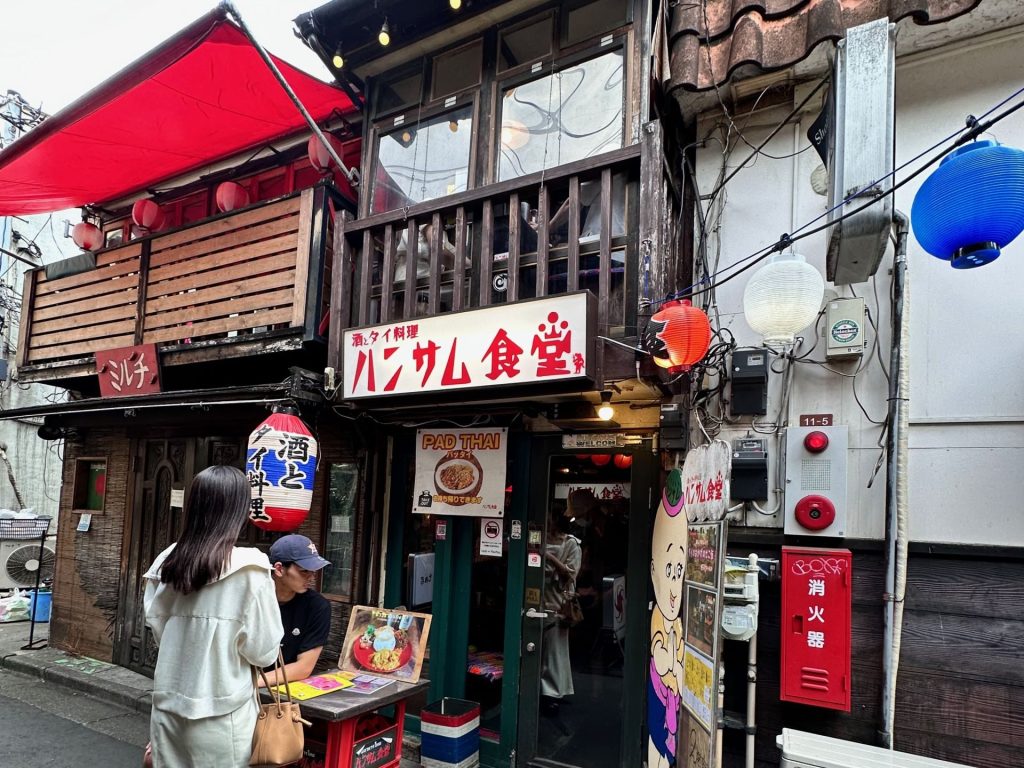
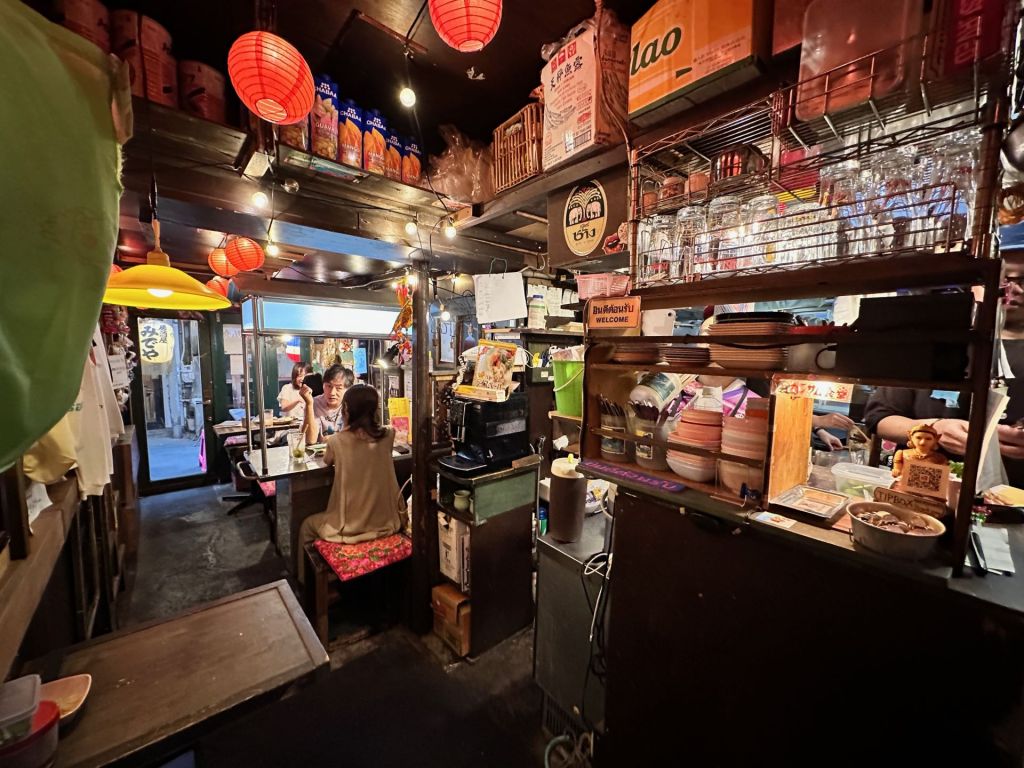
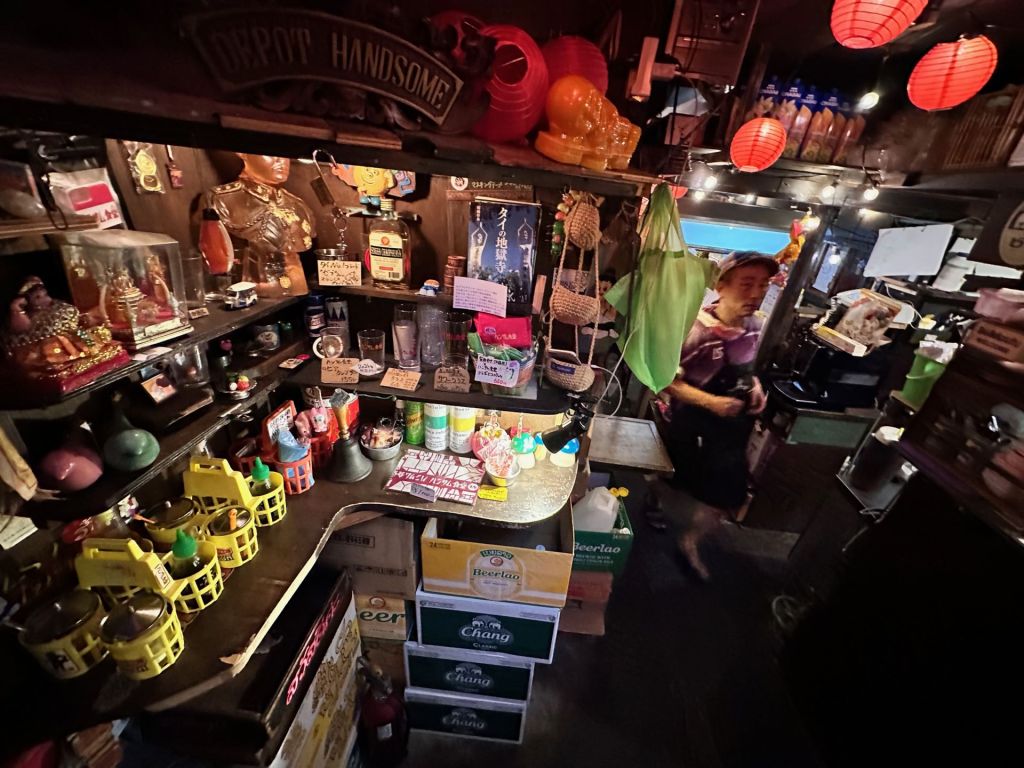
Bar Handsome, a Thai restaurant, is housed in one of these old wooden buildings. The short and narrow facade belies its compact space. A tiny, efficiently organized kitchen fans out into multiple levels with cozy seating areas.
Although the remaining yokochos are under threat from rising real estate costs, there has been a resurgence of people appreciating these pedestrian-oriented streets and alleyways.
Here, the numerous bars and restaurants are teeny; some interiors allow only six visitors. However, the small scale of the interiors and the small scale of the street (both in width and elevation) provide a sense of intimacy that is rare in global cities. Without a permanent accommodation for cars, tables, chairs and upturned beer crates are set out at meal times in all seasons. This encourages social activity and creates a vibrant communal life on the street.
 live | make | transform